consequence

consequence

301

Reviews

0

Loves

1

Lists

Streak

012345678910

consequence reviewed Marrow Deep by Mastodon 2w

9.5

The band delivers a metal masterpiece in the wake of unfathomable loss — Mastodon have proven themselves adept at working their art through grief. Remission, their first album, features a burning horse on the cover that drummer-vocalist Brann Dailor associated with his late sister Skye, a loss that would later more directly inspire Crack the Skye. A couple years later, The Hunter was informed by guitarist-singer Brent Hinds’ brother’s death during a hunting trip. Emperor of Sand was touched by bassist-vocalist Troy Sanders’ wife receiving a cancer diagnosis, as well as the loss of guitarist Bill Kelliher’s mother. Hushed and Grim was driven by the loss of their longtime manager Nick John, a figure who had been with them from their rise out of the worlds of grindcore, death metal, and noise rock into a vaunted and esteemed career as modern metal masters. And then they lost Brent. Get Mastodon Tickets Here Mastodon have always risen to the occasion, and their new album Marrow Deep is no different. It’s no secret that Hinds fell out of love with heavy music as the band’s career went on, with him saying as much in interviews over a wide span of years. You’d be forgiven for thinking it was a wider held belief of the band, given their extracurricular activitiess largely revolving around rock and prog rather than the extremes of their early career. Marrow Deep proves otherwise. It’s easy to point to their recent Leviathan anniversary tours as the source of the return of true metallic grit, but this has been a beast lingering in the wait for much longer. All of Mastodon’s power is on full display here, with some of the best playing and vocal performances ever from Dailor and Sanders, while Kelliher continues to be an absolute riff machine. Yet, what truly shines is the warm glowing pride the trio of founding members have for newcomers Nick Johnston and João Nogueira. Opening track “Barbarian’s Blood” features a gleefully bizarre synth solo from Nogueira, with its science fictional timbres matching perfectly the imagistic history of the band, even as they perform one of their most savage tracks in years. Second track “Poisonous Weapons,” opening with a sample as though they were a young hungry punk-metal band again, features a guitar solo from Johnston that is filled with outside tonality, electing not to try to replicate the bluegrass and country licks of Hinds and instead choosing more overtly jazz terrain. The position of these two tracks is not coincidental: heavy metal menace is back and these two players are now important brushes in the cup. The application of guests across Marrow Deep is delivered with a similar painterly sophistication. The feature list is stacked: Ben Koller and Nate Newton from Converge come in for guest spots alongside Kurt Ballou manning the boards; Queens of the Stone Age’s Josh Homme returns for the first time since Blood Mountain; Clutch’s Neil Fallon likewise returning to the fold for the first time since Leviathan, and Gojira’s Joe Duplantier and Lamb of God’s Randy Blythe show up for good measure, as well. And there’s even an appearance by heavy metal godfather Geezer Butler of Black Sabbath. Yet, save for the magical voice of Homme and Geezer’s inimitable bass, you would be forgiven for missing these features as they appear. Their deployment feels so natural with the compositions that they barely register as guest spots, instead seamlessly fitting in as another extension of songwriting tools the band has at its disposal. The outro to lead single “Your Ghost Again” was composed in two parts, with the overtly prog rock portion being composed by Johnston and Nogueira before shifting effortless into a heavy closing riff by Kelliher. The synchrony shown in that passage is a key for the full album. For those who complained, wrongly I might add, that Mastodon were beginning to retread the same waters over the past few records, this differentiation of duties and songwriting approaches gets wielded across each song. Nogueira writes as though he is discovering lost Gentle Giant tracks in the vault; Johnston brings a finesse and jazzy ear that belies the immense technical gifts he possesses, while Dailor produces anthemic stargazing choruses and Kelliher is free to explore the expanse between the band’s roots in grindcore and sludge metal to the wider expressive art rock they found together. Of particular note is the shift in production, now split between Patrick Berger and Kurt Ballou as co-producers. Ballou’s noted gift for pulling the grit and sense of cavernous spaciousness out of bands is on full display here. The raw sonics of the album are the rawest and grittiest since Leviathan, eschewing the cleaner production focus the band took on in the wake of Crack the Skye’s gargantuan success. Berger likewise dials in a sound that has enough reverb and sonic depth to no longer feel like an active tense rock record, allowing the playing and composition to take the role that more forward production has vied with in the past. Marrow Deep has a strong argument for the best-sounding record of the band’s career, justifying its sly lyrical nods to tracks from across the band’s history by also being in touch with the sonic landscape of those records. Throughout Marrow Deep, Mastodon sound freer than they’ve sounded since Blood Mountain. But so too do the songs bear the obvious strain of loss and love, including Dailor’s mother, who passed during the making of the album, as well. There is a near-panic to the vocals, a desperation you only get graveside, grasping at fingertips being dragged away from you forever. Anyone who has been within the wells of grief knows it is not a simple shape and it kicks up strange emotions you would never have anticipated. Mastodon honor both. Mid-record, the band delivers an instrumental duel between Johnston and Nogueira on “Out Like a Lamb,” a battle recapitulated in greater length on album closer “The Three Fates.” It’s a clear pledge by the band. They know what they can do and knew better than us what they’d been sitting on, waiting for the opportunity to be as rivetingly heavy as they were in those early days. They want us to know what’s coming, who will be in the writing room for the duration of what comes next. Mastodon don’t just sound like they are honoring the immensity of their artistic and personal past. They sound hungry for the future again in a way they haven’t quite been so fervent about since Crack the Skye blew the doors off. That eagerness and hunger is infectious. If Crack the Skye signaled the beginning of their second era, then Marrow Deep is the big bang of their third. This is rebirth. Mastodon are headlining a Fall 2026 North American tour with support from Deafheaven and Alcest. Pick up tickets here. <span data-mce-type="bookmark" style="display: inline-block;width: 0px;overflow: hidden;line-height: 0" class="mce_SELRES_start">&#65279;</span>Your browser does not support iframes.&nbsp;

consequence reviewed Weezer by Weezer 4w

8.5

Weezer are back, Weezer never left, Weezer are here to rock — If you told a casual fan that Weezer‘s 20th LP, widely dubbed The Gold Album, features a self-referential quiet-loud rocker intentionally structured as a “sequel” to 1994’s “Undone (The Sweater Song),” they might get more irritated than Leslie Jones’s character in that Rivers Cuomo-centric SNL sketch. “C.E.O.”’s concept admittedly doesn’t sound great on paper: It opens with a twinkling guitar arpeggio and overdubbed background chatter, echoing that Blue Album classic, and our songwriter wastes no time getting meta: “Cranking out another ’90s jam/ Wish I could do something new,” he speak-sings in the intro. “But nobody wants to hear that/ They just want the classics/ Can’t blame ’em, really/ There’s something special about your early shit.” Find Weezer Tickets Here The end result isn’t instant classic Weezer on par with that predecessor. But it’s heartening that everything about “C.E.O.” feels real — both in the lyrics, as Cuomo channels an artist’s struggle to push forward and “give the people what they want,” and in how the band mirrors that angst with an unfussy clean-to-fuzz, amps-in-the-room arrangement. It’s keeper-tier Weezer not because it chases the ’90s, but because it evokes the earnestness that made so much of the “Undone” era so compelling. (Plus, in Weezer world, a bridge section with a wicked, octave-layered guitar solo never hurts.) Much of The Gold Album captures a similar spirit — of Weezer looking back at their career arc, musing about keeping the show on the road. It’s also their funniest, rawest, most musically spry album since at least 2014’s Everything Will Be Alright in the End — even Jones’ SNL character, who argued that “Weezer died when Matt Sharp left,” might jump back on the bandwagon. These are the kind of Big Rock Opinions that few other bands seem to spark, and it’s pretty much been that way from the beginning — at least since the almighty Pinkerton, now approaching 30 years old, bloomed from mixed reviews to cult status to genuine “masterpiece” praise. Each record brings its own opportunity for a supposed redemption arc and “best since ____” pull quote (see: above), but Weezer simply just keep on Weezering: surprise-hit covers (a 2018 take on Toto’s “Africa”), lovely orchestral-pop detours (2021’s OK Human), a quadrilogy of seasonal-themed releases touching on everything from dance-rock to metal (the 2022 SZNZ project). Maybe in this scenario I’m just Matt Damon’s lifer-fan SNL character, but I consider most of the quartet’s post-Hurley work solid to great — they’ve managed to experiment with new styles while maintaining a solid song-by-song batting-average. Admirable stuff! But their latest color-coded LP scratches a deeper itch — channeling the vulnerability, hookiness, and genuine heaviness of their canonized early work. As usual with Weezer, you can learn a lot by studying their credits. They’ve worked with a staggering amount of producers over the decades, but they seem to have struck a unique chemistry with their latest collaborators, Klas Åhlund (Robyn, Charli XCX, The Weeknd) and Kenneth Blume (Geese, Idles, Vince Staples). In a press statement, Blume shared a noble objective: making “the most violent Weezer album ever.” And they got pretty damn close — a notable accomplishment, given the rapturous ruckus of Pinkerton and 2002’s strangely underrated Maladroit. You feel that sheer power about 48 seconds into opener “Say Yes,” as feedback swells into geek-rock glory: power-chord fuzz, overdriven guitar leads, distorted bass, swaggering open-hi-hat drumming, and Cuomo’s ever-youthful falsetto. As a wise Weezer fan probably said upon first encountering “Dope Nose” or “Tired of Sex”: Ah, yes, that’s the shit. Regardless of how they got there, the end result breathes in a way most modern Weezer albums haven’t — there’s the occasional tape hiss, slices of in-studio chatter, some organic tempo changes, a few moments of refreshingly sloppy timing. Call it Human —and OK With It. Given that warmth, it’s only fitting that they mostly kept the writing in-house this time out, with Cuomo’s bandmates way more involved in that part of the process: Drummer Patrick Wilson — who, it’s worth reminding, co-wrote Blue classics “My Name Is Jonas,” “Surf Wax America,” and “The World Has Turned and Left Me Here” — is a clear MVP; he elevates every track with some of his most naturalistic, dynamic drumming, most notably the swaggering fills on “Shine Again.” (In addition to that one, he wrote or co-wrote four other tracks, including a delightful roast of modern-day inconvenience called “Hoops,” which builds to a massive fuzz swoon. Sample lyric: “Bought a toaster just to make some toast/ First I had to scan a QR code/ Where’s the jerk who built this hamster wheel?/ I’m gonna tell him exactly how I feel.”) Guitarist Brian Bell also co-writes four songs — most notably “We Might as Well Be Strangers,” an anthemic Cuomo duet with Wednesday’s Karly Hartzman that climaxes with a heart-tugging, head-spinning rhythmic flourish. “The LA Sound,” meanwhile, salutes the bonding minutiae of an eager, youthful touring band — loading up the van, navigating clubs that “smell like piss,” snatching the headliners’ hummus plate while they aren’t watching, eagerly anticipating their next opportunity to melt some faces. It peaks, of course, with some horns-up harmonized guitar work — just as it should. But these flourishes don’t land as nostalgia bait. They resonate because they’re lively and authentic, capturing the vibe of a great rock band leaning into being a great rock band. “You can’t fake the real thing,” they sing as “The LA Sound” fades out. On The Gold Album, you can feel that they feel it.

consequence reviewed The Ecstatic by Yasiin Bey 4w

9.0

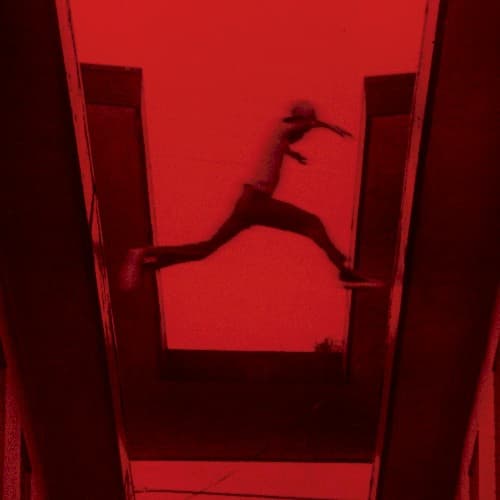
Exposure therapy for the incurious — Seven years in digital exile stranded Yasiin Bey’s fourth studio album in the bureaucratic nowhere between existence and recognition. The Ecstatic disappeared from major platforms like Spotify and Apple Music a decade after Downtown Records originally released it under his former Mos Def moniker in 2009. The Brooklyn MC later explained that its ownership had passed out of corporate hands, and the album would only return on terms he set. His qualms with the “exploitative” economics of digital service providers have only deepened since then, as lopsided profitability models tighten their grip on the music business. Now, for the first time since 2019, The Ecstatic is available to stream exclusively on Qobuz while also returning to print through Rhymesayers Entertainment. Estrangement from the general public, however, has done little to dull its force. A well-traveled passport on wax, the record bears stamps from every corner of the world. Turkish psych-rock, Lebanese fusion, Bollywood playback, Brazilian funk, and classic American soul changed hands across control rooms manned by some of hip-hop’s most inventive beatmakers. But the record isn’t merely well-traveled. Its disregard for musical borders is inseparable from a preoccupation with sociopolitical ones. “Supermagic” opens the LP with Malcolm X arguing that the pursuit of a just civic order hinges on extreme measures: “I, for one, will join in with anyone — don’t care what color you are — as long as you want to change this miserable condition that exists on this Earth.” Then Oh No drops in a swirling guitar riff from “İnce İnce” by Selda Bağcan. Later, “Quiet Dog Bite Hard” quotes another formidable dissident. Nigerian artist Fela Kuti explains that attempts to bend him toward compromise have only strengthened his resolve, setting up the percussion to gradually deepen over the next few minutes. The climax recoils every time it’s approached, never granting the release it keeps promising. The buildup itself becomes the payoff as the hushed “simmer down” chant swells into a rallying cry, each repetition coaxing the blood hotter in defiance of its own command. That friction between harmony and confrontation courses through The Ecstatic, and change is presented as an inherently radical idea. “Workers Comp.” approaches capitalism with more levity by fusing labor anxiety with deadpan humor before dissolving into its murkier companion piece. Michael Drake’s “Colours” supplies the throbbing undercurrent on “Revelations” as Bey fires at war, banks and institutional power, with each call for peace bristling with enough indignation to stare down the violence it seeks to extinguish. Although direct references to politics do occasionally recede, the instinct to explore no-go zones persists at every turn. Whereas “Life in Marvelous Times” measures Bey’s upbringing in New York City against the curious splendor of modern chaos, “Auditorium” runs a Bollywood sample underneath a verse about the Iraq War. Madlib scoops a few seconds from between Lata Mangeshkar’s vocals on “Do Jhoot Jiye Ek Sach Ke Liye” and transmutes them into one of hip-hop’s richest arrangements. Over it, Slick Rick never once registers above room temperature as he surveys the turmoil of American military intervention in the Middle East. “Wahid” keeps that geographic restlessness in motion before “The Embassy” pushes it farther still a few numbers down. Co-produced by Mr. Flash and Bey himself, “The Embassy” starts in charted territory before Ihsan al-Munzer’s “The Joy of Lina” abruptly nudges the album to its most distant coordinates. By the time the original running order comes to a close, the adaptation of Banda Black Rio’s “Casa Forte” barely even announces itself as another continental jump. The album’s impulse for thrifting isn’t confined to sound. Its red-washed cover image of a boy leaping between rooftops was lifted from Charles Burnett’s 1977 film Killer of Sheep, a portrait of Black working-class life in Watts. In poetic symmetry, freezing motion makes sense for a project perpetually leaping between structures without landing on one. Cognito, who documented The Ecstatic era, remembers how certain Bey was about that particular still. He watched the film afterward and understood why. He had an unusually close view of the album while it was still being stitched together, attending studio sessions and even traveling to South Africa with the rapper to capture photographs that now fill a 120-page hardcover book packaged as part of Rhymesayers’ deluxe reissue.

consequence reviewed The Diary Of A Polarizing Figure by Pat McAfee 4w

5.5

For an album called The Diary of a Polarizing Figure, McAfee's musical debut has remarkably little to say — Former NFL punter and current podcasting star Pat McAfee is branching out into music with The Diary of a Polarizing Figure, an album so named even though it is not very personal and the only controversy seems to be to what extent AI was involved. How did this happen? Well, The Diary of a Polarizing Figure comes via the Big Loud songwriting factory and country super producer ERNEST, hit-writer for Morgan Wallen, Jelly Roll, Lainey Wilson, and more country artists with production so sugary-sweet it could give your ear a cavity. Jelly is the connector here, befriending McAfee and then telling him, “I gotta connect you with Ern,” as the producer recalled in an interview with Whiskey Riff. After one of the hosts mentioned that he didn’t think of McAfee as a musician, ERNEST responded: “He’s not a musician, but he definitely is a fan of music. He has been writing lyrics for years, like his phone is so full of notes, stream of consciousness, poetry, stuff like that. And he started plugging his lyrics in and chanting it into [AI music generator] Suno and getting Suno demos of his songs. And we came together and I was like, ‘Yo, we can go in and cut this stuff for real.'” First, it’s interesting how casually he says “Suno demo,” as if that’s a pretty standard kind of demo these days. Second, “Cut this stuff for real,” could mean a couple of different things (Big Loud did not respond to a request for songwriting credits by publication), but the problems with the album are separate from feelings about AI authorship. Regardless of how it gets there, the lyrics are a mix of cliches and comment section bait, and as for the vocals, The Diary of a Polarizing Figure keeps stumbling into the musical uncanny valley. These days there is a musical vocabulary that feels like AI the same way excessive em dashes and, “It’s not x; it’s y,” can feel inhuman in writing. One such tic is a bass line with dementia, always wandering without any reference to where it has been. But this is not the kind of thing that sustains when you cut it for real, and is not a problem here. The second tic is the use of long and taxing vocal lines — especially in an unremarkable part of a verse, not a climactic showcase — that would pretty much never occur to any composer who requires oxygen to breathe. McAfee’s album is full of moments like this, executing long and demanding melodies, but in a strained timbre that suggests any moment now he’ll break off coughing and then hit the vape again. Casuals won’t even notice, but if you’re familiar with the demands of live performance, then this shit sounds weird. On “Blue Collar Symphony” he uses camouflaged auto-tune and vocal comping to bridge long phrases like Otis Redding — except you have never heard someone with that tone pull off that breath control, because that’s not how lungs work. At least naked auto-tune has a sci-fi whimsy; disguised here, McAfee sounds like a robot doing a human impression, and he’s just close enough — and just far enough away from the real thing — to be actually unsettling. And then there’s the lyrics, the “poetry,” built out of surface-level observations, single-entendres, and the first rhyme on Rhymezone. The album title promised a diary. But there is not much in the way of confession — there is barely evidence of an interior life. Here’s the first verse of the title track, “Polarizing Figure,” weaving drunkenly in and out of rhyme. Despite some swear words it’s as inoffensive as a press release: I’m so confused and conflicted About this life that I’m livin Everything that I do Some pumped and some shitting You see, there’s some who will ride And some who wish I would die So.. every new sitch, is it alright? Or on sight? The slangy rap of the verse is in another song from the earnest chorus. In the tenor of a soul-searching ballad, he sings, “Am I blessed/ or am I cursed/ Am I the best?/ Or the worst,” and if those are the only options, he’s coming in much closer to one half than the other. Whichever entity wrote the chorus seems to be responding to the closing couplet: “Everydayyyy.. I ask these questions And now I prayyy.. I get the message,” but there’s no payoff. In fact, there isn’t a single concrete noun in either passage. “Some,” “Everything,” “This life,” “The message,” without any places or people and not even a goddamn object. The song doesn’t care about reflection, it cares that he says his prayers. The Diary of a Polarizing Figure has no musical perspective and comes out as a mess of genres. There’s Florida-Georgia Line-style rapping in more than half the songs, the occasional soul chorus (“Outlaws”), brief spurts of adult contemporary (“Big Rain Coming,”) and even neo-reggae because hey, why not? (“No One Ever Knows”). The stomp-clap of “Click Clack” recalls country’s first AI slop hit, “Walk My Walk,” perhaps even intentionally; perhaps some of the AI hits are already influencing the human-fronted acts. McAfee also makes sure to work in some cultural grievances, interrupting the arena rock-inflected pep talk of “You’re Alive” to clarify, “No handouts, you gotta get it.” Odd advice from a podcaster who got here on the strength of a friendship with Jelly Roll and an AI demo. The Diary of a Polarizing Figure couldn’t scandalize a Parent Teacher Organization. There’s nothing on the record to take a position about — no argument, no confession, no image sharp enough to leave a mark. Twenty years of notes, handed to people who write hits for a living, and what came back is competent and airless. On the title track he asks whether he’s blessed or cursed, the best or the worst. In between would have been interesting, or at least human.