
Albums
I Will Always Love You
2003
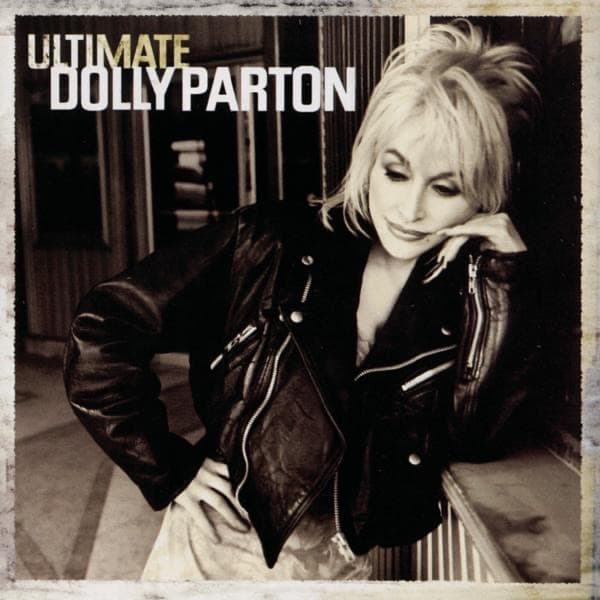
Release Date: 2003
By Pitchfork
Reviewed August 28, 2026
This Saturday, we’re remembering Dolly Parton and her indelible original version of “I Will Always Love You,” a timeless declaration of loyalty and independence.
By the time “I Will Always Love You” got passed down to my generation (Z), one of Dolly Parton’s most famous songs had evolved from a country radio hit to a chart-topping pop behemoth to a hubristic audition song that a parade of hopeful young women belted at Simon Cowell. One viral video of a 13-year-old contestant on The Voice Kids singing it has more views on YouTube than Dolly’s original has streams on Spotify. “I Will Always Love You” is a mythical musical Everest, summited by well-equipped adventurers and scrabbled down in meme-able peril by unworthy mountaineers.
It can be strange, after bingeing these clips, to revisit Dolly’s first 1974 recording of “I Will Always Love You” and hear a comparatively unassuming blueprint. Dolly still gives a hell of a performance—take the chorus, where she moves from clarion belt to featherlight head voice as if wrenching herself from a lover’s embrace, or the sentimental, spoken third verse, delivered in a broken-up drawl so singular that Linda Ronstadt skipped it entirely and Whitney barrelled straight through it into a key change. But before “I Will Always Love You” became a power ballad for divas to flex on, it was a détente disguised as a love song. Listen closely to Dolly’s version and you’ll discover a tactful, feminine assertion of freedom, presented with a humility that later, showier renditions no longer required. You’ll also have to grapple with the paradox of how Dolly claimed her autonomy by singing of unyielding devotion. Could there be a more complex declaration of independence in musical history than a smash hit about always loving the person you’re leaving?
Dolly was eight years into her marriage with lifelong husband Carl Dean when she released “I Will Always Love You,” the second single from her 13th solo album, Jolene. As Dolly-ologists will explain, the song—purportedly penned the same week, or even the same day, as “Jolene”—wasn’t written about a romantic breakup, but about the dissolution of her professional partnership with country singer Porter Wagoner, who gave Dolly her big break when he hired her as the “girl singer” on his syndicated country music television program in 1967. The podcast Dolly Parton’s America offers a detailed account of the ways Wagoner bolstered Dolly’s early career—convincing audiences to hear beauty in her “shrill” voice, signing her to RCA—and how, as her solo star rose, she began to outgrow her role as sidekick. We’ll skip straight to the climax: As the story goes, Dolly, seeing no path forward amid mounting conflict, walked into Wagoner’s office and performed “I Will Always Love You,” a resignation letter set to music. “He was sitting in the chair, and he started crying,” Dolly reminisced on the podcast. “Then he said, ‘That’s the best song you ever wrote.’ I said, ‘You inspired it.’ He said, ‘I guess you can go, if I can produce the record.’”
Watching Dolly perform “I Will Always Love You” on The Porter Wagoner Show in 1974 can induce an itchy feeling, like the minutes before school lets out for summer vacation. See Dolly’s jittery hands at the end of the video—fretting with her sleeves, smoothing out the sequins on her dress, clasping and unclasping her fingers—and recall the simile she used in her 1977 song “Light of a Clear Blue Morning” to describe herself during that period: like a captured eagle. Many have written that “I Will Always Love You” was Dolly’s way to “soften the blow” of leaving Wagoner. Its lyrics feel familiar to any woman who has sloughed off an unwanted boyfriend using calculated self-deprecation: “I would only be in your way” and “We both know I’m not what you need” are lines I’ve probably used verbatim.
There’s a level of irony baked into Dolly’s words here. By the mid-’70s, it was Wagoner who needed Dolly, who sued her for $1 million in 1979, who claimed he was entitled to a percentage of her earnings, who accused her of stealing demos from his production company’s office, and who called her “the kind of person that I would never trust with anything of mine.” Getting out ahead of Wagoner’s bitch-fit with a song called “I Will Always Love You” suddenly seems like exceptionally smart PR for Dolly—her sincerity is her alibi. But you can imagine how incensed Wagoner might have been, especially if you’re cynical enough to float the idea that Dolly wrote the song not as a heartfelt tribute but as a wile to court the public while committing treason backstage.
The problem with this paranoid hypothesis? Dolly did always love Wagoner. When the IRS came for his assets in the 1980s, she bought the rights to his songs to help him stay afloat, later returning them to him gratis (“The songs are on the way, but I’ll accept none of your money,” Wagoner recalled her saying in a 2004 interview). At a celebration of his 50 years as a Grand Ole Opry member in 2007, Dolly closed the night by once again singing “I Will Always Love You” directly to him—this time, before a much larger audience, many of whom I suspect went misty-eyed. Six months after this taping, Wagoner lay on his deathbed in Nashville. “One of the last people he saw on this Earth,” testified country singer Marty Stuart on Dolly Parton’s America, “was a girl named Dolly.”
Shortly after news of Dolly’s own death broke a few days ago, I relayed this story to my roommate, and detected a whiff of annoyance—or was it protectiveness?—in her crossed arms and unsmiling expression. I could tell what she was thinking: Why would Dolly do all that for the guy who’d put her through hell? Perhaps in 2026, these kinds of stories—men throwing tantrums, women mending fences—are no longer feel-good, no longer inspirational. “Forgiveness is all there is,” Dolly once said—it’s a declaration befitting a woman nicknamed Saint Dolly for her charity, championing of LGBTQ rights, funding of literacy programs, and attitude of love and acceptance toward all. But there’s a more colloquial usage of “saint,” one that feels less complimentary: That woman is a saint! you might say of someone who puts up with bullshit you’d never tolerate. In an era when excusing male hostilities finally feels more like a prerogative than the mandate of patriarchy, it’s understandable that the forgiving approach might come across as overtolerance, or even enablement.
Dolly had a breakout role to play in shifting culture in this direction. In 9 to 5, the 1980 comedy about a group of working women taking down their “sexist, egotistical, lying, hypocritical bigot” boss, she became a symbol for a new kind of woman who refused bullshit. It’s convenient to chart Dolly’s feminist awakening in the years surrounding her departure from The Porter Wagoner Show as a progression that begins with the sugar pill of “I Will Always Love You,” ramps up with the please-be-a-girls’-girl anthem “Jolene,” and peaks in the overt symbolism of Doralee Rhodes hog-tying Mr. Hart. But how do you square the fact that the same Dolly who so iconically portrayed a secretary’s revenge fantasies onscreen would soon, in real life, bail out her flailing former boss?
I hear a simple yet radical answer to this question in Dolly’s version of “I Will Always Love You”: Loving people, even flawed people, can be its own self-rewarding, freeing act, a choice that need not be at odds with cultivating self-respect or demanding respect from others. The grandiose covers we’ve come to expect from viral X Factor and American Idol auditions seem to interpret “always” as a matter of duration—we have grown used to hearing “I Will Always Love You” as the torch song to end all torch songs, a tearful promise to follow our beloved to the ends of the Earth and the ends of time. Dolly’s “always” evokes, to me, a different sort of commitment, one grounded in self-determination: It’s the “always” of I’ll love you no matter what you do—not because you deserve it, but because loving is my choice to make. What does it mean to love someone in unhappy circumstances? To love someone who sues you for a million bucks and calls you untrustworthy? To love someone who doesn’t show love back? It means understanding that your capacity to love doesn’t depend on them at all, and thus understanding love to be an ultimate act of self-realization. So goodbye, and please don’t cry—all those who learned from Saint Dolly to liberate themselves through love will think of her every step of the way.